 Board Games & Recommendations
Trivial Pursuit Meets Poker: An Alternative for Seasoned Quiz Groups
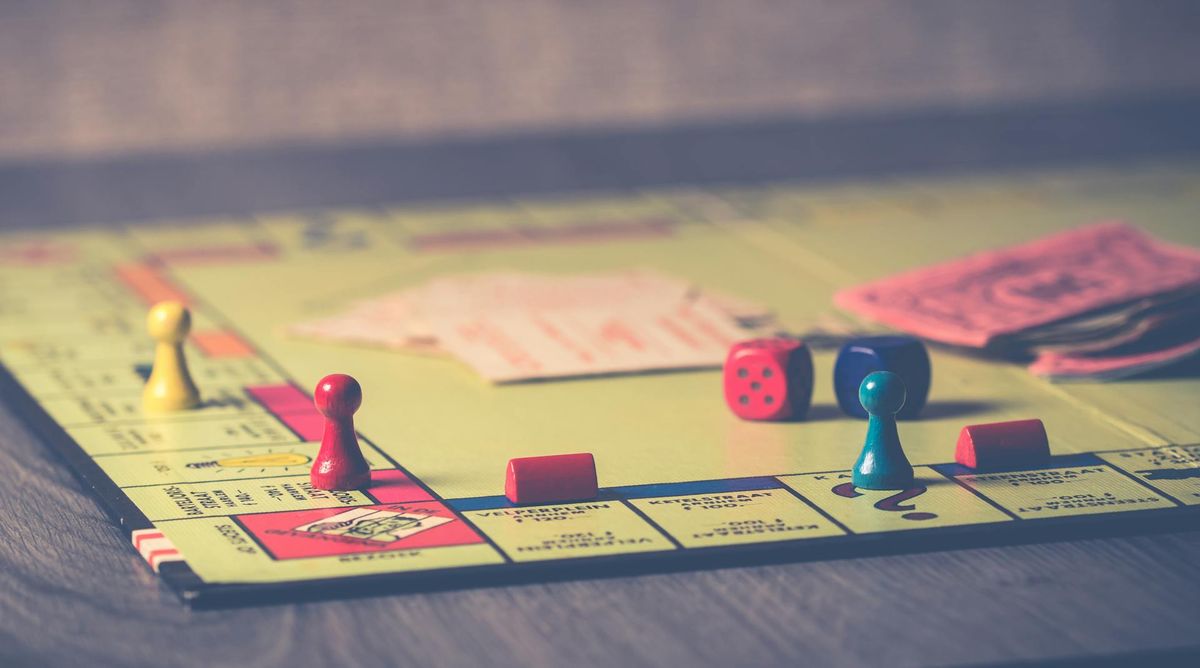
Since the early eighties, Trivial Pursuit has been the game every other quiz game gets measured against. Say "quiz board game" and most people picture the round token with six wedges. No other game of its kind has made it onto so many living room shelves.
Which is exactly why its weak spots are so well known. Two sentences come up at almost every table that has opened the box more than five times: "We've had that question before." And: "There's no point playing against them."
This piece does two things. First, three house rules that make the original work again for an evening. Then a variant with the same underlying feel – a question, a group at the table, tension until the reveal – that rules out both problems mechanically. Short version: Trivial Pursuit meets poker.
What Trivial Pursuit still gets right
Before we get to alternatives, this needs saying: the game has survived four decades for good reasons.
- The rules explain themselves in two minutes. Roll, move, answer. No special phases, no resources, no exceptions.
- Six categories is an honest spread. Geography, entertainment, history, arts and literature, science and nature, sport and leisure – hardly anyone is bad at all six.
- Progress is visible. The wedges in the token are one of the best progress indicators ever slotted into a board game. Everyone can see where everyone stands without asking.
- It is a game about talking. After the reveal, the table discusses. "I'd never have guessed that" is the real yield of the evening.
If you want a round where people talk, eat and laugh in between, a quiz game is the right instinct. The only question is which one.
The three places where it breaks down
1. The running time is not predictable
The box usually says an hour. With six people and ordinary bad luck on the dice, that regularly becomes two. The problem isn't the length itself, it's that nobody knows it in advance: the evening ends when somebody collects the last wedge, not when it happens to suit.
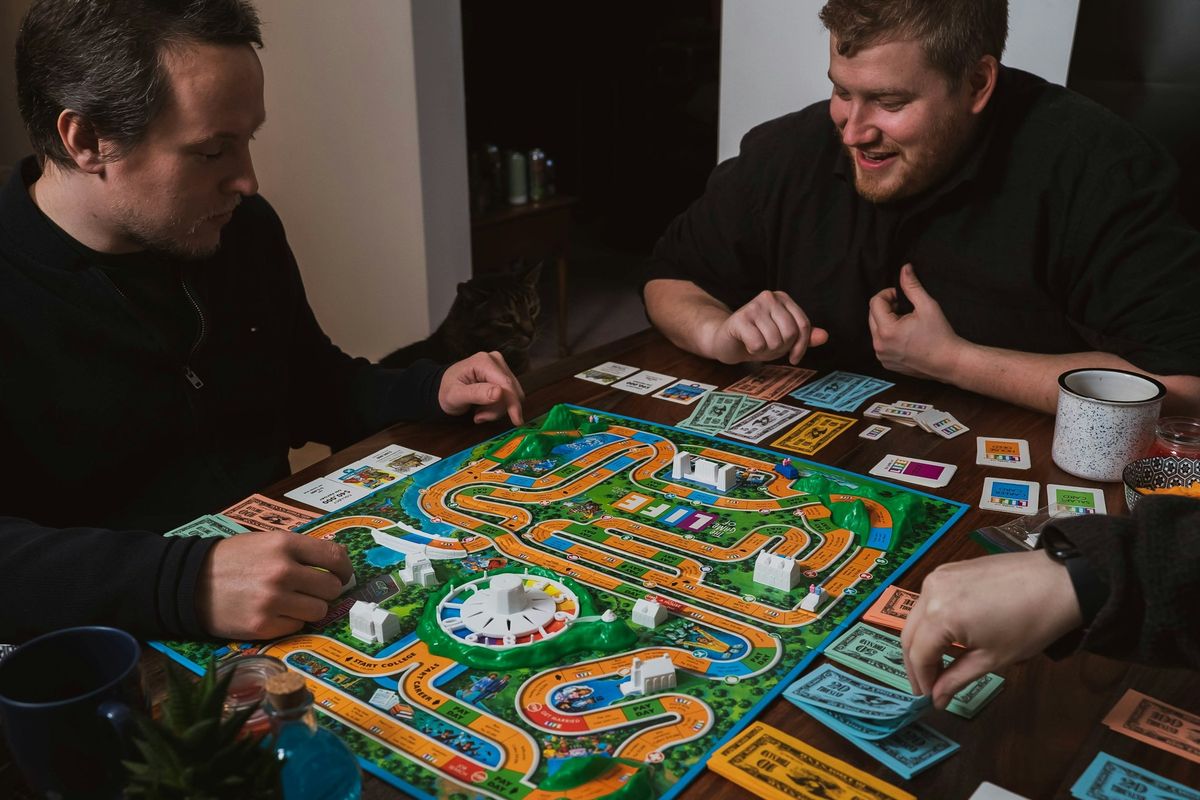
The second half of that is waiting. Get a question wrong and you hand over, then watch five other people play. With six at the table, everyone is actually occupied about one sixth of the evening.
2. The knowledge gap decides too early
Whoever knows the most wins. That sounds fair, and by the game's own logic it is. It also makes the evening predictable. Almost every group has one person who reliably owns three categories – and after forty minutes everyone else knows how this ends.
What's left for the others is watching, with dice. That's the point where people start checking their phones.
3. The card deck is finite
Every edition holds a fixed number of questions. That lasts for many evenings – but not for a group that takes the same box out ten times a year. Eventually the cards come round again, and the answers with them. From then on it isn't a knowledge game, it's a memory test about an evening three months ago.
A new edition then costs another 30 to 40 euros, and the cycle starts over.
Three house rules that rescue the original
Before the box goes back in the cupboard for good: these three changes cost nothing and fix two of the three problems.
1. A fixed finish time instead of a full set of wedges. Agree up front: 45 minutes. Whoever holds the most wedges then wins; a tie is settled by one final question for everybody. The running time becomes predictable, and the ending is tense instead of a slog.
2. Everybody answers, not just the player whose turn it is. The others write their answer down, face down. Anyone who was right without being on turn gets a bonus roll next round. The waiting disappears, because nobody is only watching any more.
3. Two teams instead of six individuals. The knowledge gap spreads out, every answer gets discussed, and weak categories get covered. For mixed groups this is the single most effective rule change there is.
What these three don't fix: the finite deck. That needs either a new edition – or a different principle.
Trivial Pursuit meets poker: the idea
The approach behind QuizPoker swaps out two components and leaves the rest alone.
First: estimation questions instead of knowledge questions. Not "who wrote The Magic Mountain?" but "how many pages does the German first edition have?" Nobody knows the exact answer to an estimation question. There is no person at the table who "has" that category. There are only people who land closer than others.
Second: stakes instead of wedges. Between the question and the reveal, you bet – as in poker. Confident players raise. Players with no idea fold and lose little. Players who look convincing can take a round without coming anywhere near the right answer.
That's the real shift: the evening is no longer decided by who knows the most, but by who best judges what they know. Those are two completely different skills – and the second one is spread far more evenly across any group.
How a round plays out
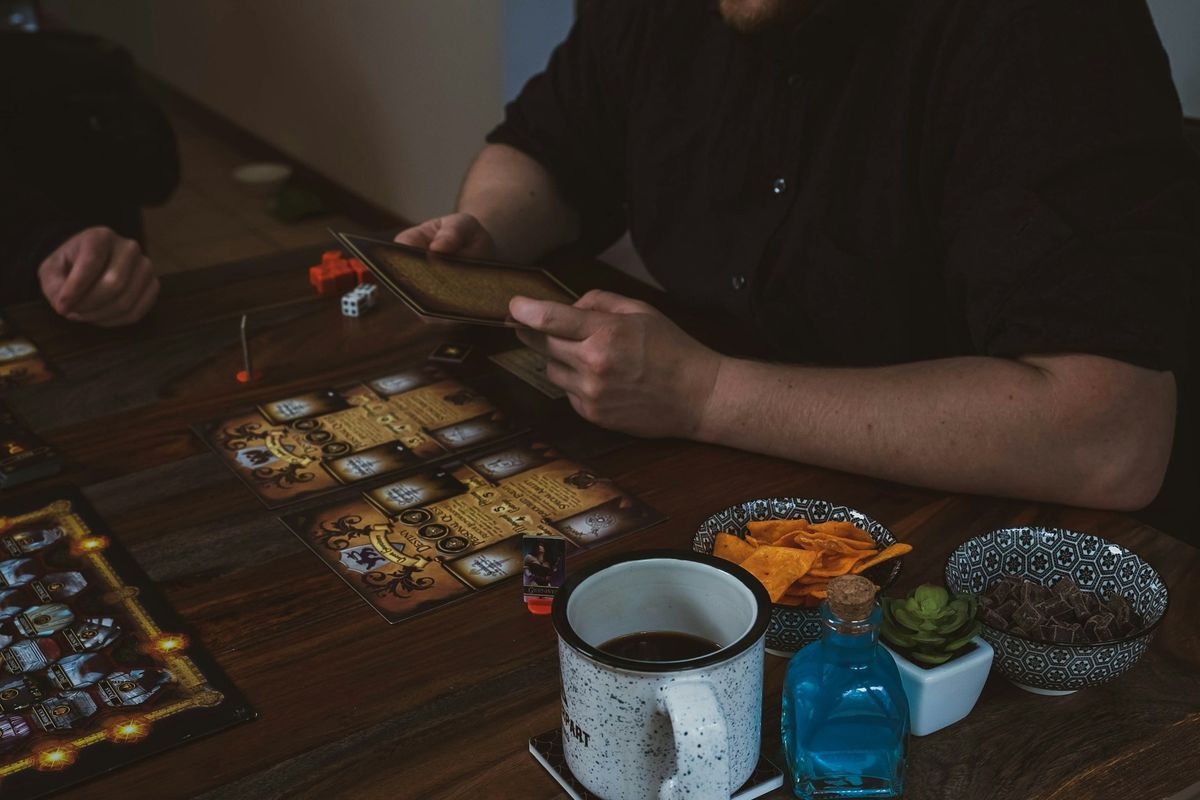
Every question is played over four betting rounds. The whole thing takes about five minutes.
- The question appears. Everyone enters an estimate – face down, at the same time, nobody waiting. Then the first betting round: call, raise or fold.
- The first hint appears. Every question has two. A hint narrows the order of magnitude without giving the answer away. Second betting round: check, bet, raise or fold.
- The second hint appears. Third betting round, same options. This is where it shows who actually used the hint and who is only pretending.
- The reveal. One final betting round follows, then everyone still in shows their number. Closest to the answer takes the pot – over or under makes no difference, only the distance counts.
The decisive difference from the original: in Trivial Pursuit the reveal ends the round. Here it opens the most interesting betting round of all. Anyone who has been bluffing until now has a decision to make.
Why not knowing becomes playable
Here's how it goes at a real table.
The question: "How many litres of water does it take to produce a single pair of jeans?" Nobody knows. The estimates around the table run from 200 to 15,000.
One player bets high immediately. They have no idea – but the others don't know that. Two fold because the number feels too uncertain. After the first hint the same player raises again. The rest give up. The pot goes to someone whose estimate was off by a factor of ten.
In Trivial Pursuit that move doesn't exist. There are exactly two outcomes: right or wrong. Here there is a third – and it's the one that matters for everybody who mentally checks out of a classic quiz after twenty minutes.
The answer, incidentally: around 7,000 litres, across the whole chain from cotton to finished trousers.
Side by side
Running time Trivial Pursuit: 60 to 120 minutes, open-ended. QuizPoker: about five minutes per question, stop whenever you like.
Waiting Trivial Pursuit: one player is on turn. QuizPoker: everybody answers at once, every round.
Knowledge gap Trivial Pursuit: decides the game. QuizPoker: helps, but good betting beats it regularly.
Equipment Trivial Pursuit: board, cards, tokens, table. QuizPoker: one smartphone per person, in the browser, no installation.
Fresh questions Trivial Pursuit: buy a new edition. QuizPoker: over 400 estimation questions across 18 categories, added to continuously.
Group size Trivial Pursuit: good with four to six. QuizPoker: 2 to 8 players, and more people make it better rather than slower.
What you need
One person creates a lobby and shares the six-character code, everyone else joins. No download, no registration, no equipment – the app handles blinds, bets and settlement.
If you would rather play at the table with real chips and paper, you can: the app then supplies only the questions and hints and you do the rest. The full rules are in the game instructions.
On cost, without the runaround: three questions free, then unlimited. A pass from 4.99 € unlocks 24 hours of unlimited play. No subscription — nothing renews automatically.
Conclusion
Trivial Pursuit belongs on the shelf, and the three house rules above get a lot out of it. What they don't solve: eventually a seasoned group knows the cards, and eventually everyone knows who wins.
If that's your problem, the poker variant is the obvious next step: same underlying feel, same amount of conversation, but an outcome that stays open until the last bet. Try it with one round of QuizPoker.
Read on: the quiz board games comparison puts Trivial Pursuit, Smart 10 and QuizPoker directly side by side. If you want to know how to bet convincingly without knowing the answer, the poker bluffing tips cover the basics. And for the rest of the evening there are ideas in planning a game night.
Tags
trivial pursuit trivial pursuit alternative quiz brettspiel quizspiele spieleabend schätzfragen quizpoker